gearo
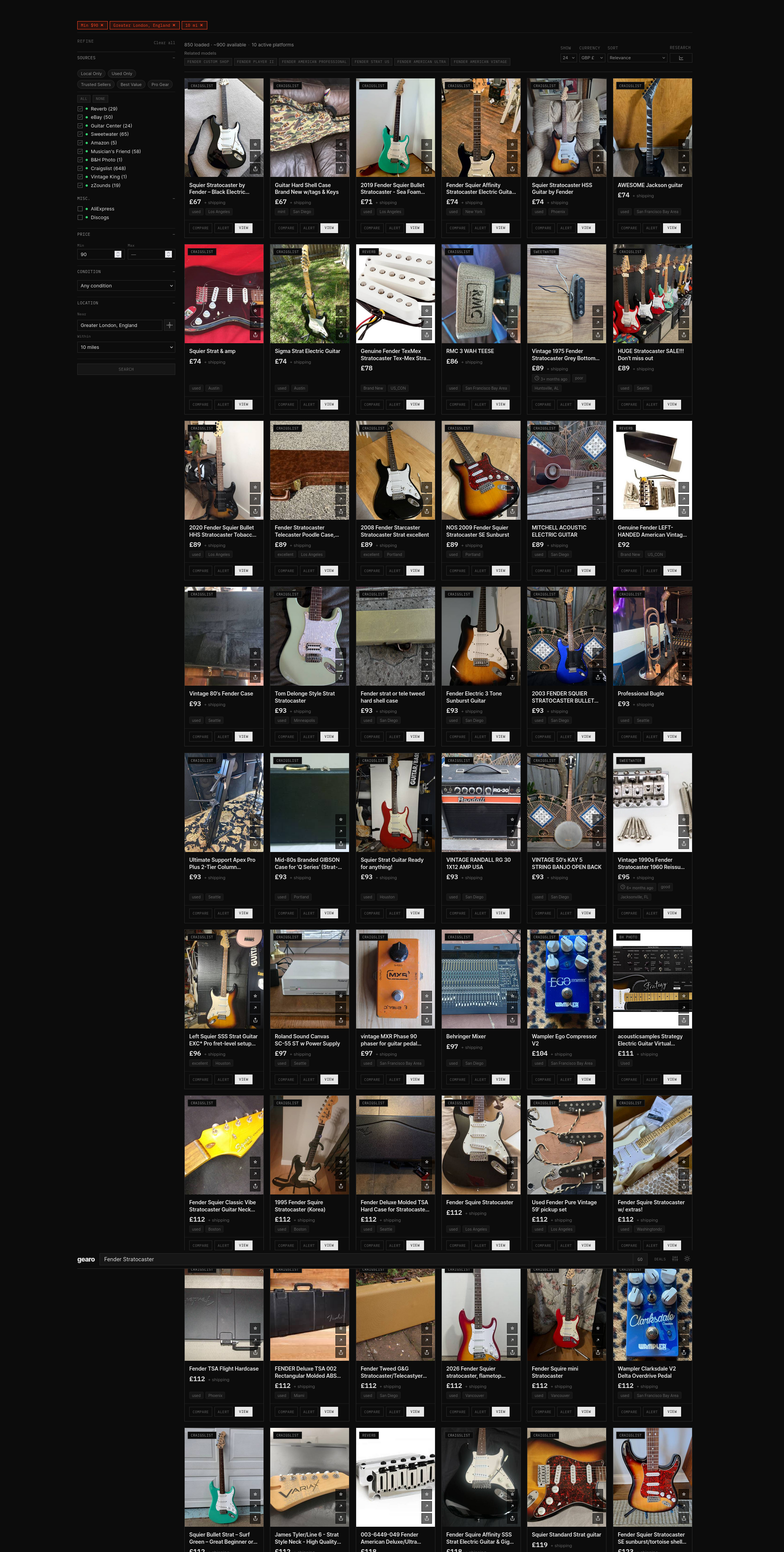
gearo is a music gear price comparison, discovery, and marketplace search platform built for musicians, producers, guitarists, bassists, studio owners, engineers, collectors, bargain hunters, and second-hand gear buyers. It brings together listings from Reverb, eBay, Amazon, Guitar Center, Musician's Friend, Sweetwater, B&H Photo, Craigslist, Vintage King, zZounds, AliExpress, Discogs, Facebook Marketplace, and Gumtree so buyers can compare what a piece of gear is actually selling for before they decide whether to click through.
The Problem
Buying used music gear is fragmented and time-consuming. A synth, pedal, interface, microphone, guitar, or amp can appear across several marketplaces with different pricing conventions, incomplete descriptions, inconsistent condition notes, weak images, duplicate listings, and uneven seller trust. The buyer still has to do the manual work: open tabs, compare platforms, judge whether the asking price is fair, and sort the useful listings from the noise.
The Solution
gearo turns that scattered market into a single buying interface. It normalizes results, suppresses duplicates, ranks by relevance and geography, and layers in price intelligence from historical samples so users can read listings against percentile-based fair-price labels. The interface is designed to keep noisy marketplace data skimmable: price, condition, seller quality, freshness, location, images, and platform trust are presented in a way that makes fast comparison easier.
The Work
Building gearo went well beyond scraping. Different marketplaces needed different acquisition strategies: official APIs where available, server-rendered HTML parsing where possible, remote browser rendering, and Playwright-backed extraction for dynamic pages. The product also had to handle affiliate-safe outbound links, relevance scoring, geo-ranking, marketplace weighting, listing normalization, and duplicate suppression without making the UX feel heavy or losing the speed expected from a search product.
On the operational side, the system leans on caching, in-flight request coalescing, stampede prevention, platform health tracking, real-time SSE streaming, infinite scroll, and quick-view modals so searches stay fast while results fan out across many sources. That combination of product design and reliability work is what keeps the experience useful on a phone in a shop, studio, rehearsal room, or pawn shop, where the decision usually has to be made quickly.
The outcome is a practical decision layer for buyers: find the gear, compare the market, understand the price, and decide whether a listing is worth opening, watching, or ignoring.